
The 3 Numbers That Tell You If You're Ready to Stop Renting
Renter to Owner · Long Island
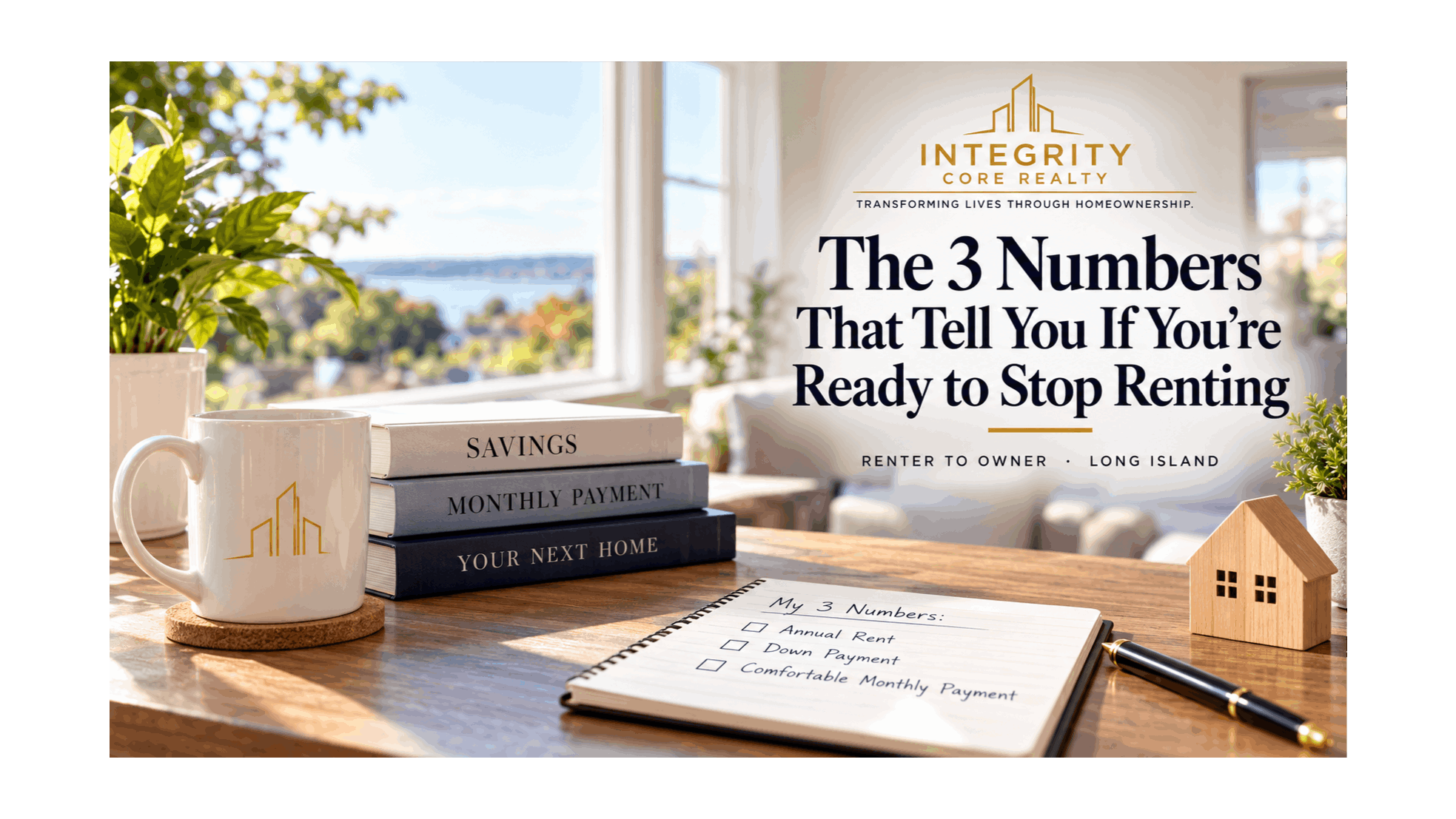
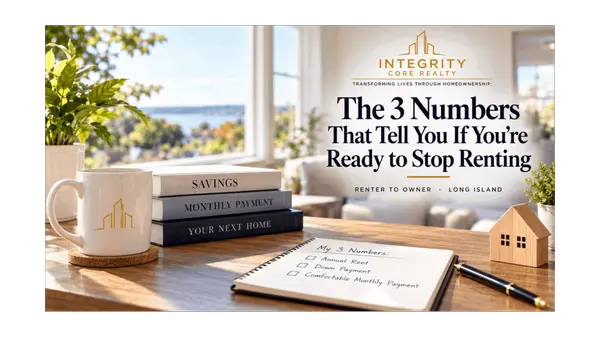
The 3 Numbers That Tell You If You're Ready to Stop Renting
Forget the gut feeling. Whether you're ready to buy on Long Island comes down to three numbers you can check tonight, and none of them is "20 percent down."
AskAuggie | Straight Answers for Long Island & Queens Buyers | October 2026 | 3 min read
Most renters don't stay renters because they love it. They stay because nobody ever showed them the actual math, so "someday" never gets a date. Here's the math. Three numbers, no spin.
Number 1: Your Rent, Times 12
Multiply your monthly rent by 12. That's what you hand your landlord every year, gone, no equity, no return. At $2,800 a month, that's $33,600 a year. Five years of that is $168,000, which is a down payment on most of Long Island. You're already paying housing money. The question is whose future it's building.
Number 2: What You Could Actually Put Down
Not 20 percent. That's the most expensive myth in real estate. Plenty of buyers put down far less, some co-op buildings on Long Island accept 10 percent, and certain loan programs go lower for buyers who qualify. Your real number is what you've saved minus a cushion for closing costs and life. Write it down. Even if it's smaller than you'd like, it's a starting line, not a verdict.
Number 3: The Monthly Payment That Lets You Sleep
Decide the monthly housing number you're comfortable with before anyone shows you a house. If it's close to your current rent, you're closer than you think, and co-ops and condos are where that math works first on Long Island and in Queens. If it's not close yet, now you know the gap, and a gap with a number on it is a plan.
Shortcut: want the rent side of this math done for you? Run your numbers through the free rental tools at icr.homes and bring the results to the conversation. [SWAP THIS LINK TO THE RENTAL APP URL]
Quick Questions
Do I really need 20 percent down to buy on Long Island?
No. Many buyers purchase with less, some co-ops accept 10 percent down, and loan programs exist for qualified buyers with smaller down payments. The right number depends on your situation, which is exactly what a pre-approval conversation sorts out.
Is buying always better than renting?
No, and anyone who says otherwise is selling something. Renting wins for flexibility and short timelines. Buying wins when you're staying put and want your housing money building your equity instead of your landlord's. The three numbers above tell you which side of that line you're on.
AskAuggie · No Dumb Questions
Got Your Three Numbers? Let's Talk.
Bring your rent, your savings, and your comfort number, and we'll tell you honestly whether it's go time or save-more time. No pressure either way.
Disclaimer: This article is general information, not financial, lending, or legal advice. Down payment requirements, loan programs, and co-op policies vary and are determined by lenders and individual buildings; consult a licensed mortgage professional about your specific situation. AskAuggie.homes is operated in affiliation with Integrity Core Realty, licensed real estate broker, 100 Jericho Quadrangle, Suite 235, Jericho, NY 11753, (516) 200-1202. Equal Housing Opportunity.
Recent Posts


Your Info Source
 Renter to Owner · Long Island The 3 Numbers That Tell You If You're Ready to Stop Renting Forget the gut feeling. Whether you're ready to buy on Long Island comes down to three numbers you can check tonight, and none of them is "20 percent down." AskAuggie | Straight Answers for Long Island & Quee
- A beautiful home is important—but so is the neighborhood that surrounds it. One of the greatest advantages of working with a local real estate professional is gaining insight that goes far beyond online listings. Every community has its own personality, lifestyle, and long-term value that can't alwa
- Buying your first home is exciting—but it can also feel overwhelming. Between mortgage terms, inspections, contracts, and countless online listings, it's easy to wonder where to begin. The good news is that you don't need to know everything before getting started. The best first step is understandin
- For many homeowners, the word "downsizing" can feel emotional. After all, your home may be filled with decades of memories, family gatherings, milestones, and traditions. But downsizing isn't about giving something up—it's about creating a home that better supports the life you want today. Many peop